Making it Obvious: Lactation Support IS Emotional Support
I often forget to state (what I see as) the obvious. When I pick up a conversation started hours or days ago with no preface, my partner has to remind me that he has no idea who or what I’m talking about.
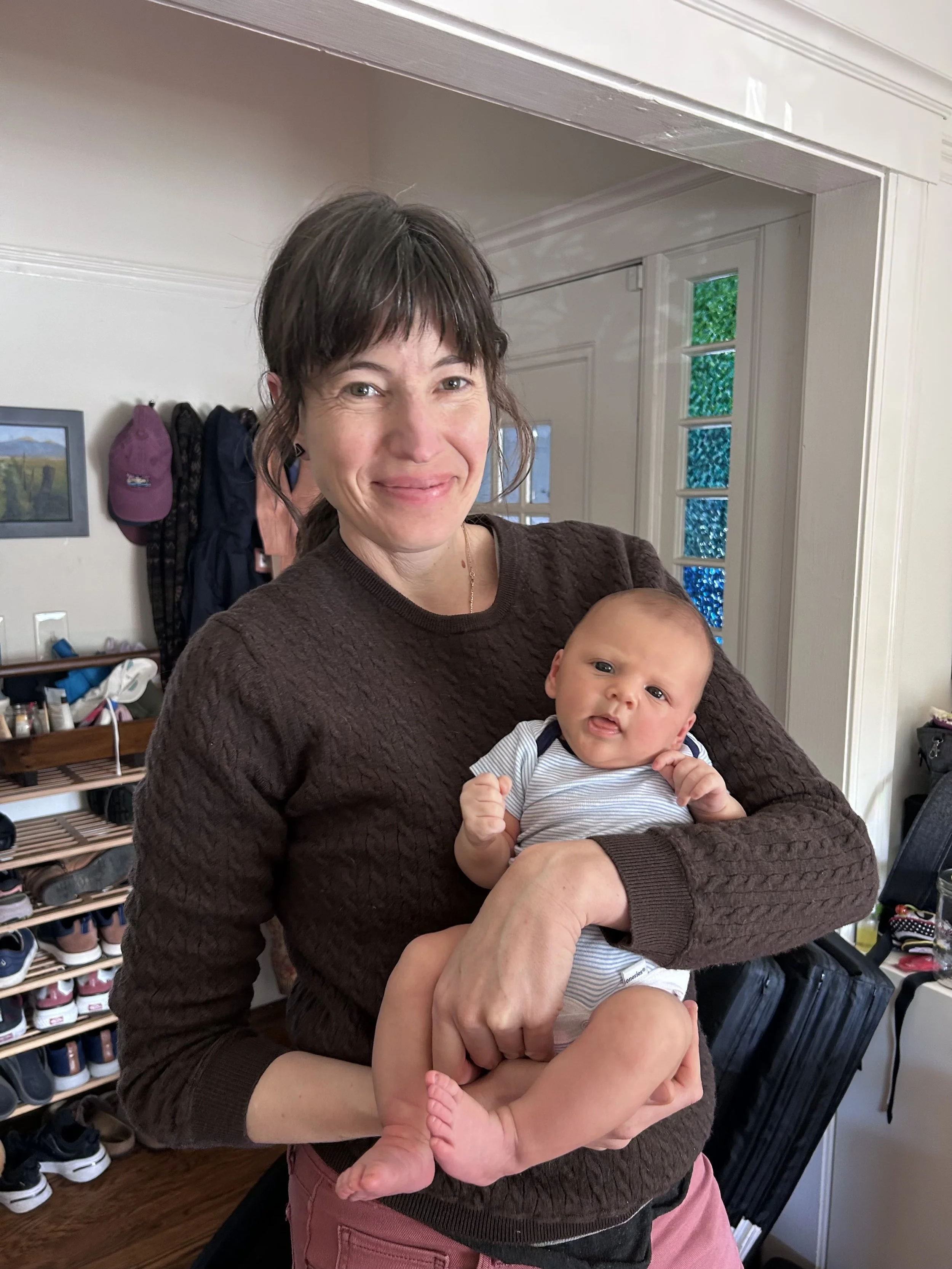
Getting to hold adorable babies is my emotional support.
Similarly, my poetry mentor is constantly imploring me to surface my thinking. I am certain there’s no way anyone could fail to grasp the meaning of a line or stanza, and yet my very intelligent reader is confused.
A recent client interaction showed me there’s something I need to make very clear about my approach to lactation: emotional support is not just an element of good lactation care, it’s the main component.
This mother was pregnant with her second baby after a difficult first nursing experience. Following our initial email exchange about logistics, she asked if I do emotional support in addition to clinical support. I was a little stunned at the question. Of course I do emotional support, that’s so obvious!
But then I realized that it’s not obvious at all.
Many doctors don’t see their job as explicitly including emotional support. Most generously, we could say that they simply don’t have time.
But I’m a doula and a community midwife. Emotional support and continuity of care is our bread and butter. And I’m not unique. Most private practice lactation consultants understand the fundamental role of emotional support. Otherwise, they wouldn’t be in business.
I wrote back to this client that I thought emotional support was 75% of lactation work, she agreed, and we had a great in-person consult.
After the visit, I was updating insurance info on my website and realized that my FAQ page was entirely focused on what I do as a clinician (latch, ergonomics, supply management, etc). Maybe I wrote it that way because I felt I had something to prove, or maybe because I was imitating other people’s websites. I honestly can't remember—I wrote those FAQs in fifteen minutes over a year ago when I re-did my website and then promptly forgot all about them. Oops.
So I took down the FAQs until I can put more thought into them. And I’m learning to state my obvious:
Skilled lactation support is synonymous emotional support. Nursing dyads are complex systems located inside other complex systems (the family unit, their wider community, medical care, jobs, etc). There’s no way to do this work without addressing all of those layers, including on an emotional level.
Our job is to help the parents figure out how to manage infant feeding alongside sleep, eating, enjoying their baby, taking care of other children, paid work, and their households. All of this is deeply personal and emotionally fraught.
So yes, good lactation care necessarily involves being with families in all the messy, entangled, joyous, difficult feelings of parenthood.